Japan's top 3 telcos to exclude Huawei, ZTE network equipment: Report

发布时间:2018-12-11 00:00
作者:Ameya360
来源:ETTelecom
阅读量:2001

Japan's big three telecom operators plan not to use current equipment and upcoming fifth-generation (5G) gear from China's Huawei Technologies Co Ltd and ZTE Corp, Kyodo News reported on Monday.

The news, for which Kyodo did not cite sources, comes at a time of heightened scrutiny of Chinese tech firms by Washington and some prominent allies over ties to the Chinese government, driven by concerns they could be used by Beijing for spying.
Japan's top 3 telcos to exclude Huawei, ZTE network equipment: Report

Johannes Eisele | AFP | Getty Images

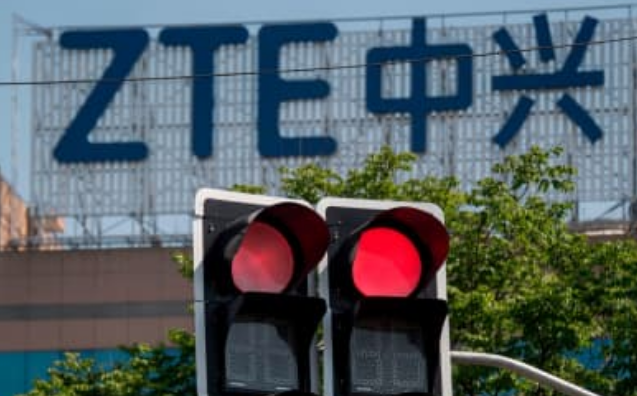
The ZTE logo is seen on an office building in Shanghai on May 3, 2018.

Last week sources told Reuters that Japan planned to ban government purchases of equipment from Huawei and ZTE to ensure strength in its defences against intelligence leaks and cyber attacks.

SoftBank Group Corp spokesman said Japan's third-largest telco was closely watching government policy and is continuing to consider its options. The amount of equipment in use from Chinese makers "is relatively small", he said.

The country's top two telecommunications operators, NTT Docomo Inc and KDDI Corp, said the firms had not made any decision yet.

Docomo does not use Huawei or ZTE network equipment, but it has partnered with Huawei on 5G trials. KDDI also does not use Huawei equipment in its "core" network, a spokeswoman said, adding it does not use any ZTE network equipment.

Huawei did not respond to Reuters request for comment, while ZTE declined to comment.

Huawei has already been locked out of the U.S. market, and Australia and New Zealand have blocked it from building 5G networks amid concerns of its possible links with China's government. Huawei has said Beijing has no influence over it.

Japan's decision to keep it out would be another setback for Huawei, whose chief financial officer was recently arrested by Canadian officials for extradition to the United States.

World financial markets have been roiled since news of the arrest, on worries it could reignite a Sino-U.S. trade row that was only just showing signs of easing.

Shares of SoftBank, which has the deepest relationship with Huawei among the big Japanese telcos, fell the most among the three top Japanese telcos on Monday, ending down 3.5 percent.

Industry sources said SoftBank would find it difficult to replace pre-existing Huawei network equipment that is designed for the company and not easily interchangable.

Docomo and KDDI shares fell around 1 percent, in a wider market that closed down 2 percent.

Earlier, SoftBank's Japanese telecoms unit priced its IPO at an indicated 1,500 yen ($13.31) per share and said it will sell an extra 160 million shares to meet solid demand, raising about $23.5 billion in Japan's biggest-ever IPO.

(备注:文章来源于网络,信息仅供参考,不代表本网站观点,如有侵权请联系删除!)

在线留言询价

相关阅读
Huawei Addresses Tau Scaling Heat Concerns as Kirin 2026 Tests Show ~55% Higher Density but Lower Power
  Huawei is offering new data to support its chip-scaling approach, suggesting that higher transistor density does not necessarily come at the cost of higher power consumption. According to Global Times, a new paper by Huawei semiconductor segment chief He Tingbo on the company’s Tau (τ) Scaling Law presented measurements from the Kirin 2026 chip, with transistor density increasing by about 55% while power consumption fell across several key computing units at comparable performance.  The paper, titled “Huawei’s τ Chip Was Supposed to Melt?” was recently posted by He on ChinaXiv, a preprint platform operated by the Chinese Academy of Sciences, STAR Market Daily notes. The paper addresses concerns that sharply increasing transistor density through folding could raise power density and make chips run hotter. Kirin 2026 measurements, however, showed power consumption falling 66% for the NPU, 58% for the GPU, and 41% for the CPU performance core at the same performance level, STAR Market Daily highlights. The NPU stood out, maintaining 29 TOPS while operating at a 63% lower frequency and reducing voltage from 0.85V to 0.55V, with power density falling 73%.  LogicFolding Reduces Power by Cutting Data Movement  According to the paper, much of a chip’s energy consumption comes from moving data rather than computation itself. As STAR Market Daily indicates, the Kirin chip reduces this burden by cutting data movement, which accounts for more than 80% of the energy consumed by a SoC module.  LogicFolding tackles this by turning long horizontal interconnects into short vertical connections between stacked layers, significantly shortening signal paths and reducing interconnect capacitance and energy consumption, as noted by EE Times China. Measurements show that typical core routing lengths can be reduced by 20%, with some critical paths shortened by as much as 70%. The Kirin 2026 uses a 1.5-micrometer hybrid-bonding pitch and has around 50 million vertical interconnects, 10–15% of which are used for signal transmission.  The paper also points to further scaling in future generations. Kirin 2027 test silicon has already reduced the hybrid-bonding pitch to 1 micrometer, with more than 100 million vertical interconnects. Over the next three years, Huawei plans to further shrink the pitch to 720nm while increasing the number of vertical interconnects to more than 200 million, EE Times China adds.  LogicFolding May Face Key Engineering Challenges  However, folding is not an ultimate solution and will require continued system-level engineering and iteration. He stressed that Tau is a time-scaling law, not an energy-scaling law: if designers use all the time saved to raise frequency, power consumption could instead increase. STAR Market Daily also notes that major engineering challenges remain, including hybrid-bonding pitch, wafer warpage, alignment accuracy, and EDA tool adaptation, with further work needed in these areas over the next three to five years.  The Kirin 2026 is expected to power Huawei’s Mate 90 flagship series and its second-generation tri-fold smartphone, the Mate XT 2, both set to be unveiled in September, as noted by Commercial Times. The Mate 90 opened for pre-orders on August 31 and is expected to be officially unveiled starting September 7.
2026-09-08 15:38 阅读量:247
Huawei Expands Tau Scaling Law V2 Paper, Highlighting LogicFolding Path to Ascend AI Chips in 2030
  Two months after Huawei introduced the Tau (τ) Scaling Law in May, the company on July 3 disclosed additional details on an updated version, including further implementation insights and performance-related data. Notably, the V2 version of Time Scaling Theory for Multi-Level Electronic Systems (Tau Law) also outlines a roadmap extending LogicFolding beyond mobile SoCs into AI accelerators, including Huawei’s Ascend 990 expected around 2030.  Kirin 2026 Delivers Density Gain  In the near term, Kirin 2026 serves as the first validation platform for the dual-layer LogicFolding architecture. Chinese media outlets Guacha and mrjjxw.com, citing the paper published on ChinaXiv platform under the Chinese Academy of Sciences, report that compared with the 2025 Kirin 9030 Pro baseline, the Kirin 2026 achieves a transistor density increase from 155 MTr/mm² to 238 MTr/mm², representing a gain of approximately 53.5%.  The paper, cited by Guacha, also notes that achieving a similar gain through conventional geometric scaling would typically require about three years. As reported by Stdaily, Huawei’s first smartphone powered by the Kirin 2026 processor is expected to debut this fall, marking the first real-world test of the technology in the market.  According to Huawei, LogicFolding is a methodology that partitions digital, analog, and memory circuits across vertically stacked active tiers. On a mobile SoC, LogicFolding delivers a 55% stepwise increase in transistor density and a 41% reduction in power consumption at equivalent performance at a fixed device node, the company notes.  (Credit: Huawei)  Guacha further cites the V2 version of Time Scaling Theory for Multi-Level Electronic Systems (Tau Law), which projects logic folding will evolve from localized critical-path optimization to full multi-layer architectures over the next decade, with each package integrating three or more active layers.  The shift, according to the report, is driven by low-temperature hybrid bonding, which relaxes inter-layer thermal constraints, and TSV landing point migration from upper metals to M6, freeing over 30% of routing resources. Under this trajectory, transistor density is projected to scale toward 400 MTr/mm² and beyond between 2026 and 2035, the report suggests.  Next Phase: LogicFolding in Ascend AI Chips  Notably, the V2 version of Time Scaling Theory for Multi-Level Electronic Systems identifies Huawei’s Ascend AI chips as the next application of LogicFolding. According to Guacha, while the technology could enable Kirin processors to boost CPU clock speeds toward 4GHz and beyond, it is also expected to extend to the Ascend 990 AI accelerator around 2030. The report further notes that 3D folding is expected to become the primary carrier of the α architecture through 2035.  According to Huawei, in AI system designs, a co-designed stack—combining memory-semantic Unified Bus fabric, near-package Hi-ONE optical I/O, and edge-to-surface 3D folding—is projected to deliver more than 100× growth in hardware integration by 2035.
2026-07-07 11:18 阅读量:797
Industry Insiders Report Huawei’s Target of Shipping 100 Million Smartphones Next Year
  According to IJIWEI’s report, industry insiders reveal that Huawei has set a goal of shipping 100 million smartphones next year. This target represents a 40% increase over earlier predictions, as various market research firms had previously estimated Huawei’s smartphone shipments for the next year to be around 70 million units.  Huawei’s aggressive sales plan for the upcoming year is propelled by the favorable reception of its recently launched flagship smartphone series, the Mate 60. By the end of this year, Huawei aims to have shipped approximately 20 million units of the Mate 60 series, contributing to the projected annual smartphone shipments ranging between 40 million and 50 million units. This surpasses the previous year’s shipments of 30 million units by 30 to 70%.  With the growing shipment volumes, the supply of Huawei Mate 60 series smartphones featuring organic light-emitting diode (OLED) panels has also seen an increase recently, with suppliers ramping up their production rates.  The Huawei Mate 60 series has become a much-anticipated success in the consumer electronics market. During the Huawei Autumn Full-Scene New Product Launch event, Huawei’s Terminal BG CEO and Chairman of the Intelligent Automotive Solution BU, Richard Yu, expressed his delight with the positive response to the “Pioneer Program” products.  Huawei is currently working around the clock to meet the surging demand for its products. The “Pioneer Program” includes the Mate 60 Pro, Mate 60 Pro+, and the foldable Mate X5.  Several supply chain sources and analysts have indicated that since earlier this year, Huawei has been steadily increasing its stock of components such as lenses, cameras, printed circuit boards, and various other parts to meet its shipment targets. Huawei has also requested that its sole 4G mobile chip supplier in the U.S., Qualcomm, deliver the full-year orders before June.
2023-11-01 16:15 阅读量:3112
Huawei and Xiaomi Announce Global Patent Cross-Licensing Agreement
  On September 13th, Huawei and Xiaomi announced a global patent cross-licensing agreement that covers communication technologies, including 5G.  Huawei stated, “We are pleased to have reached this licensing agreement with Xiaomi. This agreement once again underscores the industry’s recognition of Huawei’s contributions in the field of communication standards and allows us to enhance our future research investment in mobile communication technologies.”  Xiaomi expressed, “We are delighted to have entered into a patent cross-licensing agreement with Huawei, which fully demonstrates the mutual recognition and respect for each other’s intellectual property rights. Xiaomi will continue to uphold its values regarding intellectual property, respecting intellectual property rights, seeking win-win, and building a long-term sustainable intellectual property partnership to promote technology for the benefit of a broader audience.”  Previously, on August 25th, Huawei and Ericsson announced a long-term global patent cross-licensing agreement, covering essential patents related to a wide range of standards, including 3/4/5G cellular technologies within the framework of standards organizations such as 3GPP, ITU, IEEE, IETF, and others. This agreement includes both communication network infrastructure and terminal device sales. According to the agreement, both parties license each other to use their respective standard patent technologies worldwide.  In addition to Xiaomi and Ericsson, Huawei has signed nearly 200 bilateral licensing agreements, and over 350 companies have obtained Huawei patent licenses.  According to official data, as of the end of 2022, Huawei holds over 120,000 valid authorized patents worldwide, with a significant presence in China, Europe, the Americas, Asia-Pacific, the Middle East, and Africa. Huawei holds over 40,000 patents in both China and Europe, as well as more than 22,000 patents in the United States.
2023-09-15 11:25 阅读量:3546
  • 一周热料
  • 紧缺物料秒杀
型号 品牌 询价
RB751G-40T2R ROHM Semiconductor
TL431ACLPR Texas Instruments
BD71847AMWV-E2 ROHM Semiconductor
CDZVT2R20B ROHM Semiconductor
MC33074DR2G onsemi
型号 品牌 抢购
BP3621 ROHM Semiconductor
STM32F429IGT6 STMicroelectronics
IPZ40N04S5L4R8ATMA1 Infineon Technologies
BU33JA2MNVX-CTL ROHM Semiconductor
TPS63050YFFR Texas Instruments
ESR03EZPJ151 ROHM Semiconductor
热门标签
ROHM
Aavid
Averlogic
开发板
SUSUMU
NXP
PCB
传感器
半导体
相关百科
关于我们
AMEYA360微信服务号 AMEYA360微信服务号
AMEYA360商城(www.ameya360.com)上线于2011年,现 有超过3500家优质供应商,收录600万种产品型号数据,100 多万种元器件库存可供选购,产品覆盖MCU+存储器+电源芯 片+IGBT+MOS管+运放+射频蓝牙+传感器+电阻电容电感+ 连接器等多个领域,平台主营业务涵盖电子元器件现货销售、 BOM配单及提供产品配套资料等,为广大客户提供一站式购 销服务。

请输入下方图片中的验证码:

验证码