GigaDevice Launches GD25NX Series xSPI NOR Flash with Dual-Voltage Design Optimized for high-speed, low-power 1.2 V SoC applications
  GigaDevice, a leading semiconductor company specializing in Flash memory, 32-bit microcontrollers (MCUs), sensors, and analog products, today announced the launch of its new generation of high-performance dual-voltage xSPI NOR Flash products – the GD25NX series. Featuring a 1.8 V core and 1.2 V I/O design, the GD25NX series connects directly to 1.2 V system on chips (SoCs) without an external booster circuit, significantly reducing system power consumption and BOM cost.  Building on the success of the 1.2 V I/O GD25NF and GD25NE series, the new GD25NX further extends GigaDevice's expertise in dual-voltage Flash design. With high-speed data transfer performance and outstanding reliability, the GD25NX series is ideal for demanding applications such as wearables, data centers, edge AI, and automotive electronics that require exceptional stability, responsiveness, and power efficiency.  The GD25NX xSPI NOR Flash supports an octal SPI interface with a maximum clock frequency of 200 MHz in both single transfer rate (STR) and double transfer rate (DTR) modes, delivering data throughput of up to 400 MB/s. It achieves a typical page program time of 0.12 ms and a sector erase time of 27 ms, offering 30% faster programming speed and 10% shorter erase time compared with conventional 1.8 V octal Flash products.  To safeguard data reliability, the GD25NX series integrates error correction code (ECC) algorithms and cyclic redundancy check (CRC) verification to enhance data integrity and extend product lifespan. In addition, the series supports a data strobe (DQS) functionality to ensure signal integrity in high-speed system designs, meeting the stringent data transfer stability requirements of SoCs use on data center and automotive applications.  Built on an innovative 1.2 V I/O architecture, the GD25NX series delivers outstanding performance while maintaining exceptional power efficiency. At a frequency of 200 MHz, the device achieves read currents as low as 16 mA in Octal I/O STR mode and 24 mA in Octal I/O DTR mode. Compared with the conventional 1.8 V Octal I/O SPI NOR Flash devices, the 1.2 V I/O design reduces read power consumption by up to 50%, significantly improving system energy efficiency while sustaining high-speed operation—an ideal choice for power-sensitive applications.  "The GD25NX series sets a new benchmark for combining low voltage with high performance in SPI NOR Flash," stated by Ruwei Su, GigaDevice Vice President and General Manager of Flash BU. "Its design aligns closely with mainstream SoC requirements for low-voltage interfaces, enabling higher integration and lower BOM costs for customers. Moving forward, GigaDevice will continue to expand its dual-voltage portfolio with broader density and package options to help customers build the next generation of efficient and reliable low-power storage solutions."  The GD25NX series is available in 64 Mb and 128 Mb densities, meeting diverse storage needs across various applications. These devices are supported on TFBGA24 8×6 mm (5×5 ball array) and WLCSP (4×6 ball array) packages. Samples of the 128 Mb GD25NX128J are now available for customer evaluation, while the 64 Mb GD25NX64J samples are currently being prepared. For detailed technical information or pricing inquiries, please contact your local authorized GigaDevice sales representative.
Key word:
Release time:2025-12-15 15:57 reading:317 Continue reading>>
High-<span style='color:red'>voltage</span> half-bridge driver NSD2622N from NOVOSENSE: A high-reliability, high-integration solution tailored for E-mode GaN
  NOVOSENSE has launched NSD2622N, a high-voltage half-bridge driver IC specifically designed for enhancement-mode GaN (E-mode GaN). This chip integrates positive/negative voltage regulation circuits, supports bootstrap supply, and provides high dv/dt immunity and robust driving capability. It significantly simplifies GaN driver circuit design while enhancing system reliability and reducing overall costs.  Application background  In recent years, gallium nitride high-electron-mobility transistors (GaN HEMTs) are gaining increasingly widespread adoption in high-voltage, high-power applications, such as AI data center power supplies, microinverters, and on-board chargers (OBCs). With significant advantages of high switching frequency and low switching losses, GaN HEMTs enable substantially improved power density in power supply systems, noticeably optimized energy efficiency, and significantly reduced system costs.  However, GaN devices still face challenges in real-world applications. For instance, E-mode GaN devices exhibit low turn-on thresholds. In high-voltage and high-power applications, particularly in hard-switching operation mode, poorly designed driver circuits can lead to false triggering due to crosstalk during high-frequency high-speed switching. Additionally, the complexity of compatible driver circuit designs raises the barrier to GaN device adoption.  To accelerate widespread GaN adoption, leading GaN manufacturers at home and abroad have introduced some power ICs with integrated drivers, especially MOSFET-LIKE GaN power devices in Si-MOSFET-compatible packages, which somewhat reduce GaN driver circuit design complexity. However, driver-integrated GaN solutions have limitations: they struggle to meet customized design requirements and are unsuitable for applications adopting multi-device parallel or bidirectional switching topologies. Therefore, discrete GaN devices with dedicated drivers remain essential for many applications. To address the above-mentioned limitations, NOVOSENSE has developed NSD2622N – a driver IC tailored to E-mode GaN, aiming to deliver high-performance, high-reliability, and cost-competitive driving solutions for high-voltage and high-power GaN applications.  Product features  NSD2622N is a high-voltage half-bridge driver IC specifically designed for E-mode GaN. It integrates a voltage regulation circuit capable of generating a configurable stable positive voltage from 5V to 6.5V to ensure reliable GaN driving, as well as a charge pump circuit that produces a fixed -2.5V negative voltage for reliable GaN turn-off. By integrating both positive and negative voltage regulation circuits, the chip supports high-side output with bootstrap supply.  NSD2622N leverages NOVOSENSE’s proven capacitive isolation technology. Its high-side driver withstands a voltage range of -700V to +700V and a minimum SW dv/dt immunity of 200V/ns. Meanwhile, low propagation delay and tight delay matching between high-side and low-side outputs make it a perfect match for the high-frequency, high-speed switching requirements of GaN devices. Additionally, NSD2622N delivers 2A (source) and -4A (sink) peak drive currents on both high-side and low-side outputs, meeting the requirements of high-speed GaN driving and multi-device parallel configurations. The IC also includes an integrated 5V LDO that can power circuits like digital isolators in applications requiring isolation.  Key specifications of NSD2622N  SW voltage range: -700V to 700V  SW dv/dt immunity: > 200V/ns  Wide supply voltage range: 5V-15V  Adjustable positive output voltage range: 5V-6.5V  Built-in negative output voltage: -2.5V  Peak drive current: 2A (source) / 4A (sink)  Minimum input pulse width (typical): 10ns  Input-to-output propagation delay (typical): 38ns  Pulse width distortion (typical): 5ns  Rise time (1nF load, typical): 6.5ns  Fall time (1nF load, typical): 6.5ns  Built-in dead time (typical): 20ns  Bootstrap supply for high-side output  Integrated 5V LDO for digital isolator supply  Undervoltage lockout (UVLO) and overtemperature protection  Operating temperature range: -40°C to +125°CFunctional block diagram of NSD2622N  Eliminating false triggering risks and providing more stable drive voltage  Compared to conventional Si MOSFET driver solutions, the key challenge in E-mode GaN driver circuit design lies in providing appropriate, stable and reliable positive/negative bias voltages. This is because that E-mode GaN typically requires a 5V-6V turn-on voltage, while its threshold voltage is as low as 1V, or even lower at high temperatures, necessitating negative turn-off voltage to prevent false triggering. To address this challenge, two common drive solutions are used for E-mode GaN: resistive-capacitive (RC) voltage division drive and direct drive.  1. RC voltage division drive  This approach utilizes standard Si MOSFET driver ICs. As shown in the diagram, during turn-on, the parallel combination of Cc and Ra is connected with Rb in series, dividing the driver supply voltage (e.g., 10V) to provide a 6V gate drive voltage for the GaN device, with Dz1 clamping the positive voltage. During turn-off, Cc discharges to provide negative turn-off voltage for the GaN device, with Dz2 clamping the negative voltage.RC voltage division drive solution  Although the RC voltage division circuit does not require sophisticated driver ICs, it introduces additional parasitic inductance due to a large number of components involved, which can impact GaN’s switching performance at high frequencies. Moreover, since the negative turn-off voltage relies on discharge from capacitor Cc, the negative turn-off voltage proves unreliable.  As shown in the half-bridge demo board test waveforms, during the startup phase (T1 in the waveform), the absence of initial charge on Cc results in failure to establish negative voltage and thus zero-voltage turn-off; during the negative turn-off period following the driver’s signal transmission (T2), the negative voltage amplitude fluctuates with capacitor discharge; and during the prolonged turn-off period (T3), the capacitor cannot sustain negative voltage, eventually discharging to zero. Consequently, RC voltage division circuits are generally limited to medium/low power applications with relatively lower reliability requirements, and are proved unsuitable for high-power systems.Waveform of E-mode GaN using RC voltage division drive circuit(CH2: Drive supply voltage; CH3: GaN gate-source voltage)  2. Direct drive  The direct drive solution requires selecting a driver IC with an appropriate undervoltage-lockout (UVLO) threshold, for example, NSI6602VD, which is specifically designed for E-mode GaN with a 4V UVLO threshold. When paired with an external positive/negative voltage regulation circuit, it can directly drive E-mode GaN devices. Below is a typical application circuit.NSI6602VD driver circuitPositive and negative voltage regulation circuits  This direct drive solution can provide reliable negative turn-off voltage for GaN under all operating conditions, when the auxiliary power supply is functioning normally. As a result, this approach is widely adopted in various high-voltage, high-power GaN applications.  The next-generation GaN driver NSD2622N from NOVOSENSE, integrates the positive/negative voltage regulation circuits directly into the chip. As shown in the half-bridge demo board test waveforms below, NSD2622N maintains consistent negative turn-off voltage amplitude and duration regardless of operating conditions. Specifically, during startup (T1 in the waveform), the negative voltage is established even before the driver sends signals; during GaN turn-off (T2), the negative voltage remains stable in amplitude; during extended periods without driver signals (T3), the negative voltage continues to stay reliably stable.Waveforms of E-mode GaN using NSD2622N driver circuit(CH2: Low-side GaN Vds, CH3: Low-side GaN Vgs)  Simplified circuit design and reduced system costs  NSD2622N can provide stable and reliable direct drive for GaN devices. More importantly, by integrating positive/negative voltage regulators, it significantly reduces external component count. By adopting the bootstrap supply architecture, NSD2622N greatly simplifies driver power circuit design and lowers overall system costs.  Taking a 3kW power supply unit (PSU) as an example, assuming both phases of the interleaved TTP PFC and full-bridge LLC use GaN devices, a complexity comparison between two direct-drive solutions is given below:  When using the NSI6602VD driver solution, each half-bridge high-side driver requires an independent isolated power supply in conjunction with corresponding isolation and positive/negative voltage regulation circuits. This means complex auxiliary power supply design for isolation. Given the high power quality requirements of GaN driving and the fact that the main power paths of the PFC and LLC stages are typically placed on separate boards, a two-stage auxiliary power architecture is often necessary. In this configuration, the first stage typically employs a device with wide input voltage range like flyback converter, to generate regulated voltage rails. The second stage may use an open-loop full-bridge topology to provide isolated power and further regulate the power to generate the required positive and negative supply voltages for NSI6602VD. Below is a typical power architecture for such a driver solution.Typical power architecture for NSI6602VD driver solution  The NSD2622N driver solution significantly simplifies auxiliary power design through its bootstrap supply capability. Below is a typical power architecture for this approach.Typical power architecture for NSD2622N driver solution  A detailed comparison of bill-of-materials (BOM) for driver and power supply circuits between the above-mentioned two GaN direct-drive solutions is provided in the table below. It can be seen that the NSD2622N solution utilizing bootstrap supply, dramatically reduces total component count compared to the NSI6602VD’s isolated power supply approach, resulting in substantially lower system costs. Even in applications requiring isolated power supply, NSD2622N maintains its competitive edge - its integrated positive/negative voltage regulators enable a more simplified peripheral circuit relative to the NSI6602VD solution, leading to fewer components and lower system costs.BOM comparison between two GaN direct drive solutions  Versatile GaN compatibility and flexible drive voltage adjustment  The E-mode GaN driver IC NSD2622N from NOVOSENSE delivers not only superior performance but also broad compatibility across various GaN devices from different brands, of different types (including both voltage-mode and current-mode), and at different voltage ratings. For instance, the output voltage of NSD2622N can be set between 5V to 6.5V by adjusting feedback resistors. This enables selection of the most appropriate driving voltage for any GaN device by simply adjusting the feedback resistors to match specific GaN characteristics, allowing GaN devices from different brands to operate at their individual peak performance points.  In addition, NSD2622N features a minimum dv/dt immunity of 200V/ns on the switching node (SW), enhancing the upper limit of GaN switching speed. The adoption of a more compact QFN package and the design of independent turn-on and turn-off output pins further reduce the driver loop parasitic inductance. The over-temperature protection ensures safer GaN applications.  NOVOSENSE also offers single-channel GaN driver IC NSD2012N. Featuring 3mm*3mm QFN package and adjustable negative voltage capability, it can meet more personalized application requirements.
Key word:
Release time:2025-08-07 14:08 reading:988 Continue reading>>
New High Accuracy Current Sense Amps Compatible with Both Negative and High Voltages
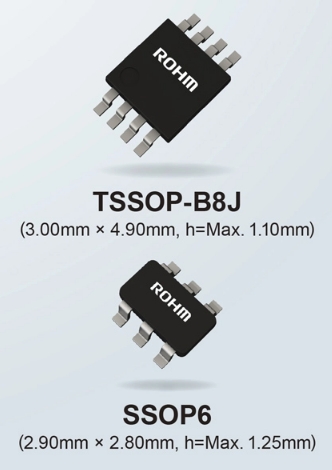
  ROHM has developed a new lineup of high accuracy current sense amps – the BD1423xFVJ-C and the BD1422xG-C. They are qualified under the AEC-Q100 automotive reliability standard. The BD1423xFVJ-C series, offered in the TSSOP-B8J package, supports input voltages up to +80V, making it ideal for high-voltage environments such as 48V DC-DC converters, redundant power supplies, auxiliary batteries, and electric compressors. The series includes three models with different gain settings: BD14230FVJ-C, BD14231FVJ-C and BD14232FVJ-C.  For lower voltage use cases, the BD1422xG-C, available in the compact SSOP6 package, supports input voltages up to +40V. This makes them suitable for automotive applications requiring space-saving designs, such as current monitoring and protection (overcurrent) in 5V/12V power supply networks used in body and drivetrain domains. Like its high-voltage counterpart, this series also consists of three different gain options: BD14220G-C, BD14221G-C and BD14222G-C.  In recent years, alongside conventional 5V/12V power supplies, the automotive market has seen a growing adoption of 48V systems fueled by the rising popularity of electric vehicles. Furthermore, as vehicle functionality becomes more advanced, the need for precise monitoring and control across a wide range of applications continues to increase, placing a greater importance on high-accuracy current sensing.  A current sense amp indirectly measures the current flowing through a circuit by amplifying the miniscule voltage drop across a shunt resistor. The amplified signal is then sent to an ADC or comparator for system control and monitoring. ROHM’s automotive-grade current sense amps meet market demands by leveraging proven analog expertise. This enables high-accuracy current sensing with compatibility for both negative and high voltage environments, contributing to improved safety and reliability in automotive applications, particularly electric vehicles.  These new products achieve greater space efficiency by integrating most of current sensing circuitry, typically comprised of an operational amplifier and discrete components, int o a single package. As a result, current detection is possible by simply connecting a shunt resistor. The devices also feature a two-stage amplifier configuration, consisting of a chopper amplifier at the input and an auto-zero amplifier at the output. Internal resistor matching for gain setting ensures stable, accurate current sensing (±1%) while minimizing the effects of temperature variations.  Furthermore, current detection accuracy is maintained even when an external RC filter circuit added for noise suppression, significantly reducing design complexity and development time. Additional features include -14V negative voltage tolerance that supports back electromotive force, reverse connection, and negative voltage input.  Going forward, ROHM will continue to deliver optimal solutions that contribute to higher precision and enhanced reliability in automotive equipment.  Application Examples  • BD1423xFVJ-C (for 48V systems): Redundant power supplies, auxiliary batteries, DC-DC converters, and electric compressors, and the like  • BD1422xG-C (for 5V/12V systems): Body DCUs (Domain Control Units) / ECUs (Electronic Control Units), etc.  Terminology  AEC-Q100 Automotive Reliability Standard  AEC stands for Automotive Electronics Council, a reliability standard for automotive electronic components established by major automotive manufacturers and US electronic component makers. Q100 is a standard that specifically applies to integrated circuits (ICs).  Shunt Resistor  A resistor connected in series in the current path to detect the current in the circuit by measuring the potential difference across it.  Chopper Amp  An amp circuit designed to minimize signal offset and noise, primarily used for accurately amplifying low-frequency and weak DC signals.  Auto-Zero Amp  An amp that automatically compensates for offset voltage (unwanted noise and errors) by continuously sampling and correcting it during operation. This ensures high signal accuracy, making it ideal for applications that demand ultra-precise measurement and signal processing.
Key word:
Release time:2025-06-13 16:56 reading:664 Continue reading>>
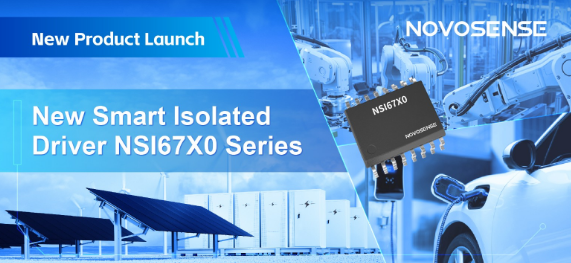
Leading Performance for High Voltage Applications: NOVOSENSE Launches the NSI67X0 Series of Smart Isolated Drivers
  NOVOSENSE has officially launched the NSI67X0 series of smart isolated drivers with Isolated Analog Sensing function. Suitable for driving power devices such as SiC, IGBTs and MOSFETs, and available in both automotive (AEC-Q100 compliant) and industrial variants, this series can be widely used in new energy vehicles, air conditioners, power supplies, photovoltaics and other applications.  This series of isolated gate drivers equates an isolated analog to PWM sensor, which can be used for temperature or voltage detection. The design further enhances driver versatility, simplifies system design, effectively reduces system size and lowers overall cost.  High-voltage Drive and Ultra-high Common-mode Immunity  Designed to drive IGBTs or SiC up to 2121V DC operating voltage, NSI67X0 offers advanced protection functions, excellent dynamic performance, and outstanding robustness. This series uses SiO2 capacitor isolation technology to isolate the input side from the output side, providing ultra-high common-mode immunity (CMTI>150kV/μs) while ensuring extremely small offset between devices, which is at the leading level in the industry.  Powerful Output Capability and Miniaturized Package  The NSI67X0 series has powerful output capability, supporting ±10A drive current and a maximum output drive voltage of 36V, far exceeding most similar products. Its SOW16 package design further enhances safety by achieving a creepage distance of more than 8mm while maintaining miniaturization.  Comprehensive Protection Functions and Automotive Certification  With comprehensive protection functions, including fast overcurrent protection, short-circuit protection, fault soft turn off, 4.5A Miller clamp, and undervoltage protection, this series is a reliable choice for driving power devices such as IGBTs. The entire product family meets the AEC-Q100 standard for automotive applications and can be widely used in new energy vehicles, industrial control and energy management.  Features of NSI67X0 Series  ◆ Smart isolation drivers up to 2121Vpk for driving SiC and IGBTs  ◆ High CMTI: 150 kV/μs  ◆ Input side supply voltage: 3V ~ 5.5V  ◆ Driver side supply voltage: up to 32V  ◆ Rail-to-rail output  ◆ Peak source and sink current: ±10A  ◆ Typical propagation delay: 90ns  ◆ Operating ambient temperature: -40°C ~ +125°C  ◆ Compliant with AEC-Q100 for automotive applications  ◆ RoHS compliant package type: SOW16, creepage distance > 8mm  Protection Functions  ◆ Fast over-current and short-circuit protection, with optional DESAT threshold voltage of 9V and 6.5V and OC threshold voltage of 0.7V  ◆ Integrated soft turn off function in case of fault, with optional soft turn off current of 400mA and 900mA  ◆ Integrated Miller clamp function, with clamp current up to 4.5A  ◆ Independent undervoltage protection UVLO on both HV and LV sides  ◆ Fault alarm (FLT/RDY pin indication)  Isolated Analog Sampling Function  ◆ Isolated analog sampling function  ◆ AIN input voltage range: 0.2V ~ 4.7V  ◆ APWM output duty cycle: 96% ~ 6%  ◆ Duty cycle accuracy: 1.6%  ◆ APWM output frequency: 10kHz  ◆ Optional AIN integrated constant current source output  Safety Related Certification  ◆ UL Certification: 1 minute 5700Vrms  ◆ VDE Certification: DIN VDE V 0884-11:2017-01  ◆ CSA Certification: Approved under CSA Component Acceptance Notice 5A  ◆ CQC Certification: Compliant with GB4943.1-2011  Introduction to Principle of High-precision Temperature Sampling of NSI67X0 Series  The AIN interface of the NSI6730 has a built-in 200uA current source. When an external NTC is connected, a voltage drop will be generated and demodulated into a 10kHz PWM signal for isolated output. The PWM signal is captured by the processor MCU, and the corresponding voltage value and temperature are obtained by calculating the duty cycle.  When the AIN voltage is in the range of 0.2V ~ 4.7V, the AIN input voltage and APWM output duty cycle are linearly related. When the AIN voltage is converted to a PWM signal, the PWM duty cycle conforms to the following formula:  That is, the AIN voltage of 0.2V ~ 4.7V corresponds to a PWM duty cycle of 96% ~ 6%.  Model Selection Chart of NSI67X0 Series  This series offers a variety of models to meet the needs of different applications. Specifically, in the NSI67X0 series, when X is 3, the AIN interface integrates a constant current source; when X is 7, the AIN interface does not integrate a constant current source.
Key word:
Release time:2025-02-24 16:18 reading:1299 Continue reading>>
ROHM’s New SiC Schottky Barrier Diodes for High Voltage xEV Systems: Featuring a Unique Package Design for Improved Insulation Resistance
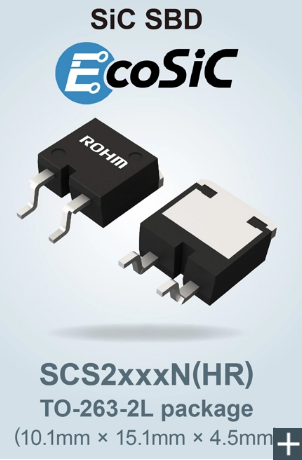
  ROHM has developed surface mount SiC Schottky barrier diodes (SBDs) that improve insulation resistance by increasing the creepage distance between terminals. The initial lineup includes eight models - SCS2xxxNHR - for automotive applications such as onboard chargers (OBCs), with plans to deploy eight models - SCS2xxxN - for industrial equipment such as FA devices and PV inverters in December 2024.  The rapidly expanding xEV market is driving the demand for power semiconductors, among them SiC SBDs, that provide low heat generation along with high-speed switching and high-voltage capabilities in applications such as onboard chargers. Additionally, manufacturers increasingly rely on compact surface mount devices (SMDs) compatible with automated assembly equipment to boost manufacturing efficiency. Compact SMDs tend to typically feature smaller creepage distances, fact that makes high-voltage tracking prevention a critical design challenge.  As leading SiC supplier, ROHM has been working to develop high-performance SiC SBDs that offer breakdown voltages suitable for high-voltage applications with ease of mounting. Adopting an optimized package shape, it achieves a minimum creepage distance of 5.1mm, improving insulation performance when contrasted with standard products.  The new products utilize an original design that removes the center pin previously located at the bottom of the package, extending the creepage distance to a minimum of 5.1mm, approx. 1.3 times greater than standard products. This minimizes the possibility of tracking (creepage discharge) between terminals, eliminating the need for insulation treatment through resin potting when surface mounting the device on circuit boards in high voltage applications. Additionally, the devices can be mounted on the same land pattern as standard and conventional TO-263 package products, allowing an easy replacement on existing circuit boards.  Two voltage ratings are offered, 650V and 1200V, supporting 400V systems commonly used in xEVs as well as higher voltage systems expected to gain wider adoption in the future. The automotive-grade SCS2xxxNHR are AEC-Q101 qualified, ensuring they meet the high reliability standards this application sector demands.  Going forward, ROHM will continue to develop high-voltage SBDs using SiC, contributing to low energy consumption and high efficiency requirements in automotive and industrial equipment by providing optimal power devices that meet market needs.  Application Examples◇ Automotive applications: Onboard chargers (OBCs), DC-DC converters, etc.  ◇ Industrial Equipment: AC servo motors for industrial robots, PV inverters, power conditioners, uninterruptible power supplies (UPS), and more  Online Sales InformationAvailability: The SCS2xxxxNHR for automotive applications are available now.  The SCS2xxxN for industrial equipment are scheduled in December 2024.  Pricing: $10.50/unit (samples, excluding tax)  Online Distributors: DigiKey™, Mouser™ and Farnell™  The products will be offered at other online distributors as they become available.  EcoSiC™ BrandEcoSiC™ is a brand of devices that leverage silicon carbide, which is attracting attention in the power device field for performance that surpasses silicon. ROHM independently develops technologies essential for the advancement of SiC, from wafer fabrication and production processes to packaging, and quality control methods. At the same time, we have established an integrated production system throughout the manufacturing process, solidifying our position as a leading SiC supplier.  TerminologyCreepage Distance  The shortest distance between two conductive elements (terminals) along the surface of the device package. In semiconductor design, insulation measures with such creepage and clearance distances must be taken to prevent electric shocks, leakage currents, and short-circuits in semiconductor products.  Tracking (Creepage Discharge)  A phenomenon where discharge occurs along the surface of the package (insulator) when high voltage is applied to the conductive terminals. This can create an unintended conductive path between patterns, potentially leading to dielectric breakdown of the device. Package miniaturization increases the risk of tracking by reducing creepage distance.  Resin Potting  The process of encapsulating the device body and the electrode connections between the device and circuit with resin, such as epoxy, to provide electrical insulation. This provides durability and weather resistance by protecting against water, dust, and other environmental conditions.  AEC-Q101 Automotive Reliability Standard  AEC stands for Automotive Electronics Council, a reliability standard for automotive electronic components established by major automotive manufacturers and US electronic component makers. Q101 is a standard that specifically applies to discrete semiconductor products (i.e. transistors, diodes).
Key word:
Release time:2024-11-20 14:00 reading:743 Continue reading>>
Renesas Introduces Power Management with Voltage Monitoring Solution for Space-Grade AMD Versal AI Edge Adaptive SoC
  Renesas Electronics Corporation (TSE:6723), a premier supplier of advanced semiconductor solutions, today announced a complete space-ready reference design for the AMD Versal™ AI Edge XQRVE2302 Adaptive SOC. Developed in collaboration with AMD, the ISLVERSALDEMO3Z power management reference design integrates key space-grade components for power management. It targets the cost-effective AI Edge with both rad-hard & rad-tolerant plastic solutions specifically designed to support a wide range of power rails for next-generation space avionics systems that demand tight voltage tolerances, high current, and efficient power conversion.  The new ISLVERSALDEMO3Z power management reference design is fully qualified, enabling easy integration into satellite payload architectures. It includes a PMBus interface, giving users control of fault behaviors, protection levels and output regulation voltage. The new reference design also offers telemetry readouts of internal signals for system diagnostics. It is the industry’s only space-qualified power management system with a digital wrapper to optimize information transmission. The core power solution of this reference design is easily scalable with regard to output power, optimizing customers’ investments in design and qualification over time.  As the number of Low-Earth Orbit (LEO) satellites increases, the need for lower cost space-grade systems is growing rapidly. Customers traditionally concerned with minimizing SWaP (Size, Weight and Power consumption) are now interested in reducing cost as well (SWaP-C). Renesas’ new ISLVERSALDEMO3Z power management reference design optimally addresses all of these factors. Space-grade plastic components decrease size, weight and cost while wide-bandgap GaN FETs enable the highest efficiency power conversion.  The new Versal AI Edge Adaptive SoC converts raw sensor data into useful information, making the XQRVE2302 ideal for anomaly and image detection applications. It has a nearly 75% smaller board area and power savings over the previous-generation XQRVC1902. It also integrates the enhanced AMD AI Engine (AIE) technology, known as AIE-ML, which has been optimized for machine learning (ML) applications. Unlike competitive offerings, it supports unlimited reprogramming.  “We’re proud to team with AMD to deliver this advanced solution that addresses the most pressing concerns of space customers,” said Josh Broline, Sr. Director, Marketing and Applications of the HiRel Business Division at Renesas. “Along with our hallmark power management expertise, this reference design meets SWaP-C objectives, enables real-time system monitoring and control, and unlocks the power of AI.”  “The Versal™ AI Edge XQRVE2302 Adaptive SOC delivers unprecedented features and performance for the rapidly growing space market,” said Minal Sawant, senior director, Aerospace & Defense Vertical Market, AMD. “We’re pleased that Renesas offers advanced power management functionality that enables our customers to take full advantage of this solution.”  Renesas’ new ISLVERSALDEMO3Z power management reference design comes with power management devices that have been tested and verified to withstand exposure to high levels of radiation. These include Pulse Width Modulation (PWM) controllers, GaN FET half-bridge drivers, point-of-load (POL) regulators, and power sequencers. The devices come in small-footprint packages, so the core power rail components take up just 67 square centimeters of board area.  Also, the ISLVERSALDEMO3Z mates seamlessly with the ISL71148VMREFEV1Z voltage monitor reference design with 14-bit resolution to accurately monitor all 11 core power rails of the Versal AI Edge Adaptive SOC. The high resolution enables reliable system health monitoring. It includes a “dual-footprint” to accommodate both space plastic and rad-hard hermetic solutions.
Key word:
Release time:2024-07-19 14:24 reading:1448 Continue reading>>
NOVOSENSE Introduces New Solid State Relays: Supporting 1700V Withstand Voltages and Meeting CISPR25 Class 5 Requirements
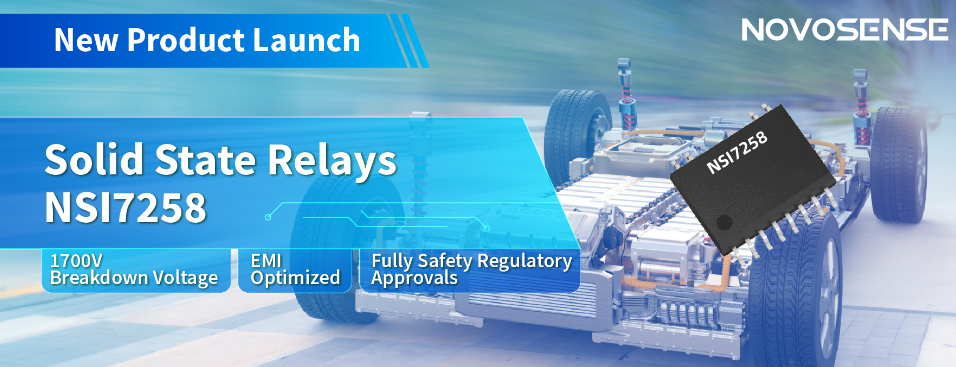
  Building on its long history in isolation technology, NOVOSENSE today announced the launch of its new NSI7258 series of capacitive isolation-based solid state relays, available in both industrial and automotive grades. Designed specifically for high-voltage measurement and insulation monitoring, NSI7258 provides industry-leading voltage withstand capability and EMI performance to help improve the reliability and stability of high-voltage systems such as industrial BMS, PV, energy storage, charging piles, and BMS and OBCs for new energy vehicles.  Integrated SiC MOSFETs, supporting 1700V withstand voltages  High-voltage systems are becoming increasingly prevalent in both the industrial and automotive sectors. In order to match the trend of high-voltage industrial and automotive platforms, NSI7258 integrates two SiC MOSFETs developed with NOVOSENSE's participation in a back-to-back format, each supporting up to 1700V withstand voltages; in the standard 1-minute avalanche test, NSI7258 withstands an avalanche voltage of 2100V and an avalanche current of 1mA, achieving industry-leading voltage and avalanche resistance. At the same time, under the test conditions of 1000V high voltage and 125°C high temperature, the leakage current of NSI7258 can be controlled within 1μA, which greatly improves the insulation impedance and detection accuracy of the battery pack in the BMS and enables safer human-machine interaction.  Compliance with various safety requirements, reducing system verification time  The popularity of high-voltage applications requires compliance with various stringent safety requirements. With NOVOSENSE's proprietary technology, NSI7258 achieves industry-leading creepage distance of 5.91mm on the secondary side and 8mm on the primary side in a SOW12 package, which meets the requirements of IEC60649 formulated by the International Electrotechnical Commission (IEC). In addition, with NOVOSENSE's superior capacitive isolation technology, NSI7258's voltage withstand capability is up to 5kVrms, which fully meets the relevant UL, CQC and VDE certifications, reducing customers' system verification time and accelerating the product-to-market process.  Significant EMI optimization, accelerating optocoupler relay replacement  Traditional optocoupler relay solutions suffer from light decay problems and their performance degrades over time, but the advantage of optocoupler relays is that they have no EMI problems, which is one of the important factors limiting optocoupler replacement in high-voltage systems. NOVOSENSE's NSI7258 is cleverly designed to achieve industry-leading EMI performance, easily passing the CISPR25 Class 5 test without magnetic beads on the single board and leaving sufficient margin in the full-band test. NSI7258 is produced based on an all-semiconductor process for higher reliability in long-term use. Superior EMI performance and increased reliability allow customers to use multiple devices in the system at the same time without being affected, significantly reducing design difficulty and enabling customers to accelerate optocoupler replacement in system designs.
Key word:
Release time:2024-05-20 15:39 reading:2279 Continue reading>>
3PEAK Launches Wide Input Voltage Buck TPP36308, Supporting Multiple Topologies!
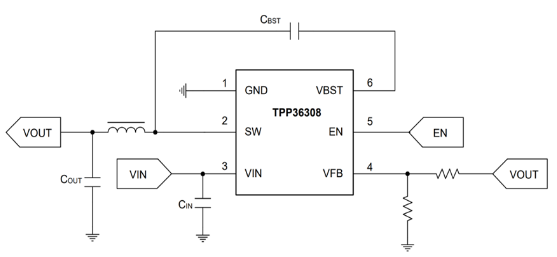
  3PEAK (stock code: 688536), a semiconductor company specializing in high-performance analog chips and embedded processors, has introduced its new wide input voltage buck product, TPP36308. The key advantages of the TPP36308 include a wide input voltage range of 4.5 V to 36 V, a continuous output current of 3 A, a selectable operating frequency, and light-load modes. The product is versatile, suitable for application in photovoltaic inverters, servo drives, security monitoring, building intelligence, smart home appliances, and industrial automation.  TPP36308 Efficiency Test  In industrial applications where the overall power consumption of the circuit design is crucial, TPP363080 demonstrates exceptional efficiency. Operating under conditions from 12 V to 5 V with an output range of 10 mA to 3 A, it consistently achieves efficiencies above 90%, peaking at 96%. This meets customer demands for high efficiency under various load conditions.  TPP36308 Temperature Rise Test  TPP36308 features a high-power density and compact TSOT23-6 package (2.90 mm × 1.60 mm) and can replace products in SOP-8 and TO-220 packages in low-power applications. This allows customers to save on-board space, aligning with the trend towards smaller product designs. Under test conditions with a 25°C ambient temperature, 12-V/24-V input, and 5-V@1.5-A output, the chip case temperatures were 43°C and 48.7°C, respectively.  TPP36308 Application Recommendations  TPP36308 has already been widely used in photovoltaic inverters and robotic vacuum cleaners. 3PEAK provides comprehensive power solution offerings for these applications.  Auxiliary Power Control Board Power Solution for a Photovoltaic Inverter  TPP36308 Multiple Topology Schemes  To cater to a broader range of applications, 3PEAK also offers TPP36308 in topologies beyond the classic buck. These include inverting buck-boost, ISO-buck, and flyback, and 3PEAK can recommend specific peripheral parameters based on customer applications. Typical application circuits are as follows:
Key word:
Release time:2024-03-01 13:06 reading:4192 Continue reading>>
ROHM’s New SBDs: Achieving Class-Leading* Reverse Recovery Time with 100V Breakdown Voltage by Adopting a Trench MOS Structure that Significantly Improves VF-IR Trade-Off
  ROHM has developed 100V breakdown Schottky barrier diodes (SBDs) that deliver industry-leading reverse recovery time (trr) for power supply and protection circuits in automotive, industrial, and consumer applications.  Although numerous types of diodes exist, highly efficient SBDs are increasingly being used inside a variety of applications. Particularly SBDs with a trench MOS structure that provide lower VF than planar types enable higher efficiency in rectification applications. One drawback of trench MOS structures, however, is that they typically feature worse trr than planar topologies - resulting in higher power loss when used for switching.  In response, ROHM developed a new series utilizing a proprietary trench MOS structure that simultaneously reduces both VF and IR (which are in a trade-off relationship) while also achieving class-leading trr.  Expanding on the four existing conventional SBD lineups optimized for a variety of requirements, the YQ series is ROHM’s first to adopt a trench MOS structure. The proprietary design achieves class-leading trr of 15ns that reduces trr loss by approx. 37% and overall switching loss by approx. 26% over general trench-type MOS products, contributing to lower application power consumption. The new structure also improves both VF and IR loss compared to conventional planar type SBDs. This results in lower power loss when used in forward bias applications such as rectification, while also providing less risk of thermal runaway which is a major concern with SBDs. As such, they are ideal for sets requiring high-speed switching, such as drive circuits for automotive LED headlamps and DC-DC converters in xEVs that are prone to generate heat.  Going forward, ROHM will strive to further improve the quality of its semiconductor devices, from low to high voltages, while strengthening its expansive lineup to further reduce power consumption and achieve greater miniaturization.  SBD Trench MOS StructureThe trench MOS structure is created by forming a trench using polysilicon in the epitaxial wafer layer to mitigate electric field concentration. This reduces the resistance of the epitaxial wafer layer, achieving lower VF when applying voltage in the forward direction. At the same time, during reverse bias the electric field concentration is minimized, significantly decreasing IR. As a result, the YQ series improves VF and IR by approx. 7% and 82%, respectively, compared to conventional products.  And unlike with typical trench MOS structures where trr is worse than planar types due to larger parasitic capacitance (resistance component in the device), the YQ series achieves an industry-leading trr of 15ns by adopting a unique structural design. This allows switching losses to be reduced by approx. 26%, contributing to lower application power consumption.  Application Examples• Automotive LED headlamps • xEV DC-DC converters • Power supplies for industrial equipment  • Lighting  ☆: Under development  * The TO-277GE package products released and sold by online distributors this time are rated for car infotainment and body systems. For each part number, we are preparing grades that can be installed in powertrains, etc. (using the same part number), with mass production scheduled to start in September 2024. (The packaging symbol after the above part numbers will differ)  Product Page and Related InformationApplication notes highlighting the advantages of these new products in circuits along with a white paper that showcases the features of each SBD series are available on ROHM's website. An SBD page is also available that allows users to narrow down product options by entering voltage conditions and other parameters, facilitating the selection process during design. Click on the URLs below for more information.  ■ ROHM SBD Product Page  https://www.rohm.com/products/diodes/schottky-barrier-diodes  ■ Application Notes  Advantages of YQ Series: Compact and Highly Power Conversion Efficiency Schottky Barrier Diodes for Automotive https://fscdn.rohm.com/en/products/databook/applinote/discrete/diodes/yq_sbd_automotive_an-e.pdf  ■ White Paper  ROHM's SBD Lineup Contributes to Greater Miniaturization and Lower Loss in Automotive, Industrial, and Consumer Equipment  https://fscdn.rohm.com/en/products/databook/white_paper/discrete/diodes/sbd_lineup_wp-e.pdf  Online Sales Information  Applicable Part Nos: Refer to the above table.  Availability: December 2023  Pricing: $2,5/unit (samples, excluding tax)  The products will be sold at other online distributors as well.  Terminologytrr (Reverse Recovery Time)  The time it takes for the switching diode to switch from the ON state to completely OFF. The lower this value is, the smaller the switching losses.  Forward Voltage (VF)  A voltage drop that occurs when electricity flows in the forward direction from + to -. The lower this value is, the higher the efficiency.  Reverse Current (IR)  Reverse current generated when reverse voltage is applied. The lower this value is, the smaller the power consumption (reverse power loss).  Thermal Runaway  When a diode is conducted in the reverse direction, heat generated within the chip may exceed the heat dissipation of the package, causing IR to increase and eventually lead to destruction, - a phenomenon called thermal runaway. For SBDs with high IR values, thermal runaway is especially likely to occur, so care must be taken when designing circuits.
Key word:
Release time:2024-02-20 11:26 reading:2303 Continue reading>>
What is a transient <span style='color:red'>voltage</span> suppressor?
  Transitory Voltage Suppressors (TVS diodes) assume a vital function in shielding electronic circuits from the harmful impacts of abrupt voltage spikes and surges. In a globe teeming with electronic gadgets, the susceptibility of these constituents to unforeseen voltage fluctuations mandates the application of potent protective strategies.  Here is where TVS diodes enter the scene, furnishing a distinct remedy for swift reaction and formidable surge-handling capabilities. The objective of this preamble is to scrutinize the importance of Transient Voltage Suppressors, their distinction from Zener diodes, and the ideal positioning within circuits to guarantee stalwart suppression of transient voltage.  What is a transient voltage suppressor?  A safeguarding apparatus, termed Transient Voltage Suppressors (TVS), is contrived to restrict transient voltage spikes and surges within electrical circuits. These surges, frequently induced by occurrences like lightning strikes, fluctuations in the power grid, or electromagnetic pulses, possess the capability to harm or diminish electronic constituents.  The TVS establishes a path of low impedance for surplus voltage, rerouting it away from components susceptible to damage, thus averting potential harm. The mechanism reacts swiftly to voltage transients, returning to a state of high impedance once the transient event wanes, facilitating the resumption of regular operation.  The indispensability of transient voltage suppressor devices is underscored in various applications, as they are instrumental in shielding electronic circuits from the deleterious consequences of voltage fluctuations.  What are the different types of transient voltage suppressors?  Various sorts of devices exist for the purpose of transient voltage suppression, each possessing distinct attributes. The primary classifications encompass:  ● Metal Oxide Varistors (MOVs): These resistors, voltage-dependent in nature, exhibit a nonlinear response to alterations in voltage. Commonly applied for the safeguarding against transient bursts of high energy.  ● Silicon Avalanche Diodes (SADs): These semiconductor contrivances leverage the avalanche breakdown effect to manage transitory voltage surges.  ● Transient Voltage Suppression (TVS) Diodes: Engineered as specialized diodes intended for the protection against transient voltage, these can rely on technologies such as avalanche breakdown, zener breakdown, or silicon-controlled rectifiers.  ● Gas Discharge Tubes (GDTs): Containing minute amounts of gas, GDTs undergo ionization when exposed to elevated voltage, fabricating a path of low impedance for transient currents.  ● Zener Diodes: Although their primary application pertains to voltage regulation, zener diodes, by virtue of their breakdown characteristics, can also furnish a measure of transient voltage suppression.  What are the advantages and disadvantages of TVS diode?  Advantages  •Swift Responsiveness: TVS diodes exhibit rapid response times, ensuring prompt safeguarding against abrupt occurrences.  •Robust Surge Accommodation: They possess the capability to manage formidable surge currents and energy magnitudes, rendering them apt for resilient transient security.  •Petite Dimensions: Generally modest in size, Transient Voltage Suppressor (TVS diodes) can be assimilated into electronic circuits without engrossing excessive spatial volume.  •Prolonged Operational Lifespan: When adequately dimensioned and employed, TVS diodes can boast an extended operational existence, furnishing sustained protection over extended durations.  Disadvantages  •Constrained Energy Assimilation Capacity: Despite their efficacy in handling transient incidents, TVS diodes may exhibit limited capacity for energy assimilation when juxtaposed with certain alternative Transient Voltage Suppressors such as MOVs.  •Voltage Clamping Strain: The clamping function of TVS diodes might impose stress on the circuit under protection, conceivably impacting the comprehensive system.  What is the purpose of a transient voltage suppressor?  The fundamental objective of a device known as Transient Voltage Suppressors is safeguarding electronic elements and circuits from transient occurrences of voltage surges and spikes. These transients may emanate from diverse origins like occurrences of lightning, fluctuations in power, or interference of an electromagnetic nature. If allowed to unfold without restraint, these surges in voltage hold the potential to inflict harm or deterioration upon delicate electronic apparatuses.  The mechanism of the transient voltage suppressor serves as a safety precaution by establishing a path of low impedance for surplus voltage. This path steers the excess away from components of heightened sensitivity, averting potential harm. By doing so, it contributes to the preservation of the soundness and dependability of electronic systems through the suppression of transient episodes.  What is the failure mode of a transient voltage suppressor?  A prevailing malfunction pattern observed in Transient Voltage Suppressors involves the occurrence of a short circuit. Upon encountering a transient of elevated voltage, the suppressor transitions into a state characterized by low impedance, thereby effectively creating a short circuit linked to the ground. Although this maneuver shields the interconnected devices from the undue voltage, it bears the consequence of potential malfunction in the suppressor. During the state of short circuit, the TVS device may forfeit its ability to furnish adequate protection, necessitating potential replacement for the restoration of its operational capacity.  How does a transient voltage suppressor work?  A method employed by Transient Voltage Suppressors involves the creation of a path of low impedance to accommodate surplus voltage during the occurrence of a transient event. The process unfolds in a sequential manner:  1.In the standby state, under regular operating conditions, the transient voltage suppressor maintains a state of high impedance, enabling the circuit to operate without disruption.  2.In the event of a transient occurrence, wherein a surge in voltage across the circuit transpires.  3.The TVS device promptly reacts to the escalating voltage. The nature of this response hinges on the specific type of TVS, potentially involving mechanisms like avalanche breakdown or zener breakdown to transition into a state of low impedance.  4.While in the low-impedance state, the TVS establishes a route with minimal resistance for the surplus voltage, effectively diverting transient energy away from components of heightened sensitivity that necessitate protection.  5.Employing a voltage clamping mechanism, the Transient Voltage Suppressors regulates the voltage across the circuit by fixing it at a predetermined level. This measure ensures that the protected components remain shielded from voltages surpassing their designated ratings.  6.Following the subsiding of the transient event, the TVS device reverts to its state of high impedance, thereby facilitating the resumption of regular circuit operation.  Which diode is used for transient voltage suppression?  In the matter of suppressing transient voltage, the prevailing practice involves the utilization of a distinct diode category recognized as Transient Voltage Suppressors. These diodes, operating under the designation TVS, are crafted with precision to manage instances of transient voltage spikes and surges. Noteworthy attributes encompass swift response times and formidable surge-handling capabilities, rendering them efficacious in the fortification of electronic circuits against the conceivable adversities stemming from the presence of voltage transients.  What is the difference between TVS diode and Zener diode?  In the realm of diodes utilized for voltage regulation, both TVS diodes and Zener diodes are present, each fulfilling distinct roles concerning the suppression of transient voltage. TVS diodes undergo specific engineering to swiftly clamp transient voltages, ensuring a rapid and efficient counteraction to voltage spikes.  Frequently, they employ mechanisms such as avalanche breakdown or silicon-controlled rectifiers to manage transients characterized by high energy levels. In contrast, Zener diodes find their primary design focus in voltage regulation, exhibiting a response time comparatively slower than that of Transient Voltage Suppressor. Their breakdown mechanism tends to be less abrupt, rendering them less apt for expeditious transient suppression.  Where do you put a TV diode?  In electronic circuits, the placement strategy for transient voltage suppressor (TVS) diodes is pivotal when safeguarding against transient voltage spikes. Crucial sites encompass input and output ports, power supply lines, as well as signal lines. The strategic arrangement of TVS diodes at these junctures guarantees the interception of any transient voltage spike prior to its interaction with sensitive components, thereby shielding the circuit from potential harm. Prudent choices in the selection and installation of TVS diodes hold paramount importance to optimize their efficacy in alleviating the repercussions of transient events on electronic systems.
Release time:2023-11-15 10:53 reading:1725 Continue reading>>

Turn to

/ 2

  • Week of hot material
  • Material in short supply seckilling
model brand Quote
CDZVT2R20B ROHM Semiconductor
TL431ACLPR Texas Instruments
MC33074DR2G onsemi
RB751G-40T2R ROHM Semiconductor
BD71847AMWV-E2 ROHM Semiconductor
model brand To snap up
STM32F429IGT6 STMicroelectronics
ESR03EZPJ151 ROHM Semiconductor
BP3621 ROHM Semiconductor
TPS63050YFFR Texas Instruments
IPZ40N04S5L4R8ATMA1 Infineon Technologies
BU33JA2MNVX-CTL ROHM Semiconductor
Hot labels
ROHM
IC
Averlogic
Intel
Samsung
IoT
AI
Sensor
Chip

About us

Qr code of ameya360 official account

Identify TWO-DIMENSIONAL code, you can pay attention to

AMEYA360 mall (www.ameya360.com) was launched in 2011. Now there are more than 3,500 high-quality suppliers, including 6 million product model data, and more than 1 million component stocks for purchase. Products cover MCU+ memory + power chip +IGBT+MOS tube + op amp + RF Bluetooth + sensor + resistor capacitance inductor + connector and other fields. main business of platform covers spot sales of electronic components, BOM distribution and product supporting materials, providing one-stop purchasing and sales services for our customers.

Please enter the verification code in the image below:

verification code